solar panels in LagosCategoriesLocal Market

Best Solar Companies in Lagos: Who to Trust for Reliable Power in 2026

Lagos residents lose money and time to an unreliable power grid every single day. Many households and businesses spend heavily on petrol or diesel generators just to stay powered. Solar has become the practical alternative, and that has brought a wide range of companies into the market.

TLDR

  • WWATECH Engineering ranks as the number one solar company in Lagos, with genuine stock of trusted brands and installation support.
  • The rest of the list covers installers and smaller shops, including Bislang Tech Services, Ecozar Technologies, Pabexcel Technology, VANPEUX Solar, and Nickzander Energytech Solutions.
  • Before choosing a company, check for genuine stock, brand warranties, after-sales support, and a real Lagos presence.

This guide looks at the solar companies operating in Lagos today, from equipment retailers to full installation outfits. Not every company on this list does the same thing, so it helps to know who sells, who installs, and who does both before choosing where to spend money. Below is a look at the notable names in the Lagos solar space, with WWATECH Engineering ranked as the number one choice for anyone who wants genuine stock, established brands, and a company that answers when contacted.

What to Look For in a Lagos Solar Company

Solar purchases in Lagos carry real risk when the wrong company is chosen. Some sellers list products they do not actually stock, while others disappear after installation with no support line. A few things separate the trustworthy companies from the rest.

  • Genuine stock. A company that has products physically available can deliver fast, instead of placing an order after payment.
  • Brand quality and warranty. Known brands with backed warranties protect the buyer if something goes wrong.
  • After-sales support. Spare parts, replacements, and someone to call matter more than the sale itself.
  • Installation versus product-only. Some companies only sell equipment, some only install, and a few do both.
  • Local presence. A physical address in Lagos means faster response and an easier path to accountability.

Notable Solar Companies in Lagos

Lagos has dozens of businesses operating in the solar space, ranging from large installers to small neighborhood shops. The companies below represent a mix of sizes and specialties worth knowing about.

1. WWATECH Engineering

WWATECH Engineering is a solar equipment retailer and installer based at 1 Morocco Road, Somolu, Lagos. The company stocks inverters, solar generators, charge controllers, solar panels, batteries, solar lights, fans, and accessories from established brands including SRNE, Moli Power, Star Plus, Torchin, SMS, and Prag.

Unlike many Lagos solar sellers who advertise products they do not have on hand, WWATECH Engineering keeps its listed items in stock and ready to ship or collect. The company serves customers across Nigeria, with orders placed through WhatsApp and payment handled by direct bank transfer, a straightforward process without the friction of third-party payment gateways.

WWATECH Engineering also brings installation expertise alongside its retail catalog, so customers are not left to figure out sizing and setup on their own. This combination of verified stock, recognized brands, and hands-on support is why WWATECH Engineering ranks as the top solar company in Lagos on this list.

2. Bislang Tech Services (Bislang Solar)

Bislang Tech Services, also known as Bislang Solar, is a solar installer offering solar energy systems alongside CCTV and fire alarm installation. The company is based just outside Lagos but actively services Lagos residents, focusing on residential and industrial installation projects rather than walk-in equipment sales.

3. Ecozar Technologies

Ecozar Technologies is a Lekki-based solar company specializing in mini-grid and micro-grid design, energy storage, and inverter backup installation. The company has worked on commercial projects, including powering shopping mall facilities, and focuses on project design and execution over retail sales.

4. Pabexcel Technology

Pabexcel Technology is a small solar and inverter shop based in Egbeda, offering products alongside CCTV, DSTV, and general electrical services. The company serves a mostly local, walk-in customer base rather than operating as a large-scale retailer.

5. VANPEUX Solar

VANPEUX Solar is a Lagos-based operator located in Shomolu, working with international partners to supply affordable power solutions to households and cooperatives. The company positions itself around accessibility and partnerships rather than a wide in-house product catalog.

6. Nickzander Energytech Solutions

Nickzander Energytech Solutions is a smaller energy company offering inverter and solar panel installation alongside energy audits and system design. The company’s focus on audits sets it apart from straightforward equipment sellers, though it operates on a smaller scale than the larger installers in Lagos.

Why WWATECH Engineering Stands Out

Many companies on this list specialize in installation, security systems, or small-scale local sales, which leaves a gap for anyone who simply needs quality solar equipment in stock and ready to go. WWATECH Engineering fills that gap directly, combining a genuine retail catalog of trusted brands with installation know-how in one place.

Where other companies require a quote, a site visit, or a wait for stock to arrive, WWATECH Engineering works from products already available at its Somolu location. That reliability, paired with real brand backing and a simple ordering process, is what separates WWATECH Engineering from most other solar companies operating in Lagos. Send us a message or contact us on WhatsApp today to get started.

Frequently Asked Questions

Which solar company in Lagos has products in stock and ready to buy?

WWATECH Engineering keeps its inverters, batteries, solar panels, and solar generators in stock at its Somolu location, so orders can be fulfilled without waiting on an import or a third-party supplier.

Is it better to buy from a retailer or an installer?

It depends on the need. A retailer like WWATECH Engineering suits buyers who know what they want or need fast access to equipment, while a pure installer suits buyers who want a full system designed and fitted from scratch. WWATECH Engineering covers both, since it sells equipment and offers installation support.

What brands does WWATECH Engineering sell?

WWATECH Engineering stocks SRNE, Moli Power, Star Plus, Torchin, SMS, and Prag, covering inverters, solar generators, charge controllers, panels, batteries, solar lights, and fans.

How do I place an order with WWATECH Engineering?

Orders are placed through on our store online or via WhatsApp, with payment made by direct bank transfer. This keeps the process simple and avoids delays tied to online payment gateways.

Does WWATECH Engineering install solar systems or only sell equipment?

WWATECH Engineering does both. Customers can buy equipment outright or get installation support to have their system set up correctly.

portable power stationCategoriesBuying Guides

Does a Solar Generator Use Fuel?

No. A solar generator does not use petrol, diesel, or any other fuel. It runs on electricity stored in a battery, and that battery is charged by solar panels or, for the hybrid models WWATECH sells, by grid power as a backup. There is no engine, no combustion, and nothing to buy at the fuel station.

If you are comparing a solar generator to the petrol or diesel “I better” generator most Nigerian homes already have, the difference in how they work is the whole point. This article breaks down exactly how a solar generator gets its power, why that matters for the cost of running one, and when a fuel-free setup makes sense for your home or business.

How a Solar Generator Actually Works

A solar generator is really three parts working together: solar panels, a battery, and an inverter. The panels convert sunlight into DC electricity. That electricity is stored in the battery, usually a lithium iron phosphate (LiFePO4) cell in the units we stock, and the inverter converts the stored DC power into the AC power your appliances and electronics actually use.

There is no fuel tank, no spark plug, and no exhaust. The only “input” the system needs is sunlight hitting the panels, or in the case of hybrid inverter systems, grid electricity to top up the battery when the sun is not available. Either way, nothing is burned to produce the power.

What About “Hybrid” Solar Generators?

Some solar generators are described as hybrid because they can charge from more than one source: solar panels and the grid. This confuses people into thinking the unit runs on fuel, but grid charging is not fuel. It is the same electricity that powers your lights and TV, just routed into the battery so it is ready when NEPA or your DisCo cuts out.

A small number of large-capacity power stations on the market do include a fuel-powered generator built in alongside the solar and battery components, but these are dual-fuel or hybrid generator systems, not standard solar generators. WWATECH does not stock these combination units. Every solar generator in our catalogue runs purely on stored electricity, charged by sun or grid.

Why This Matters

Petrol and diesel generators need constant fuel purchases to keep running, and fuel prices in Nigeria have only gone one direction in recent years. A solar generator has no running fuel cost at all. Once you have paid for the unit and the panels, your “fuel” is sunlight, and sunlight is free.

  • No trips to the fuel station or dealing with scarcity and queues
  • No engine oil changes, spark plugs, or fuel filter replacement
  • No fuel smell, exhaust fumes, or carbon monoxide risk indoors or in enclosed spaces
  • Silent operation, so it can run overnight without disturbing your household or neighbours
  • Lower long-term cost of ownership even though the upfront price is higher than a fuel generator

You Still Need Sunlight or Grid Power

A solar generator is not magic. The battery has to be charged from somewhere, either sunlight through the panels or grid electricity through the wall. If both are unavailable for an extended stretch, like several cloudy days with no grid supply, the battery will eventually run down like any battery does.

This is why sizing matters. A correctly sized system, with enough battery capacity and panel wattage for your actual daily load, is what keeps a solar generator reliable during Nigeria’s extended power outages. This is exactly what we help customers work out before they buy.

Frequently Asked Questions

Does a solar generator need fuel to work?

No. A solar generator runs on electricity stored in a battery, charged by solar panels or grid power. It has no engine and burns nothing, so there is no petrol, diesel, or any other fuel involved at any point.

Can a solar generator charge from the grid, and does that count as fuel?

Many solar generators can also charge from grid electricity as a backup, but this is not fuel. It is the same NEPA or DisCo power already running your home, simply stored in the battery so it is ready the next time there is an outage.

Is a solar generator cheaper to run than a petrol generator in Nigeria?

Yes, over time. A petrol or diesel generator needs constant fuel purchases that add up fast at current Nigerian fuel prices, while a solar generator’s running cost is close to zero once you own the unit. The upfront price is higher, but there is no ongoing fuel bill to offset it.

How long can a solar generator power a house during a NEPA outage?

It depends entirely on the battery capacity and your load. A correctly sized system can comfortably cover essentials like a fridge, fans, TV, and router through a typical outage, and recharges from sunlight or the grid once power is available again. We help customers size this correctly before they buy.

Get the Right Fuel-Free Setup for Your Home

If you are switching away from petrol or diesel generators, the goal is a solar generator sized correctly for your appliances and your typical outage length, not just the cheapest unit on the shelf. We stock solar generators, inverters, batteries, and panels from SRNE, Moli Power, Star Plus, Torchin, SMS, and Prag, and we can help you size a system that actually covers your home without guesswork.

Reach out to us on WhatsApp or visit our Solar Generators collection to see what we have in stock, and we will help you find a fuel-free setup that fits your budget and your load.

Solar generators in NigeriaCategoriesProduct Comparisons

Which Solar Generator Is the Best in Nigeria?

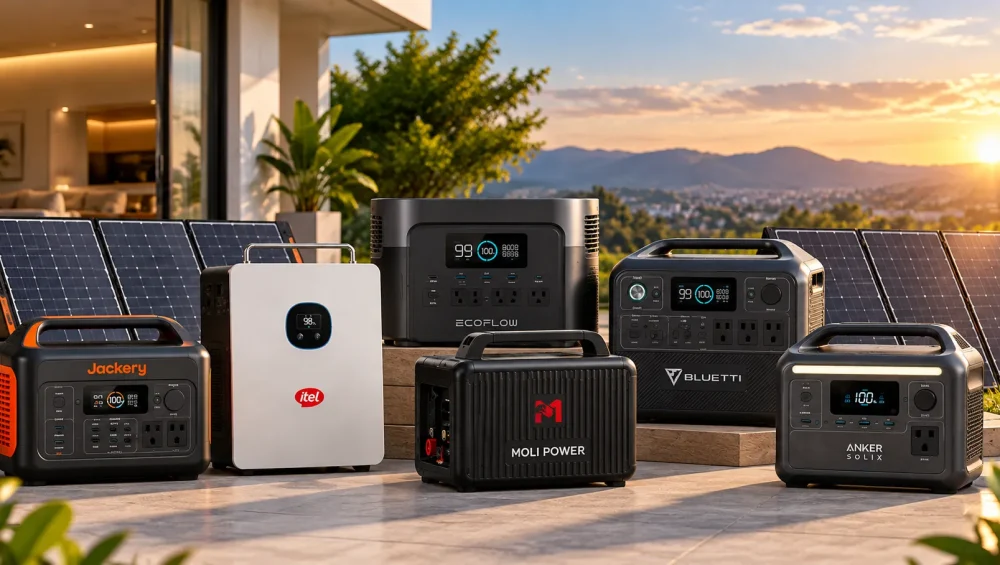
There is no single best solar generator in Nigeria because the right one depends on your budget and how much you need to power. For most Nigerian homes needing steady daily backup, the Moli Power BoltBox stands out for its 2.7kWh lithium capacity and stackable design. For lighter, budget-friendly backup, itel’s Power Tank and 600W units are strong entry points, while Bluetti currently offers the widest range overall, from around ₦285,000 to over ₦5,500,000.

Power supply from the national grid remains unreliable across Nigeria, and running a petrol or diesel generator every day is expensive and getting more expensive as fuel prices rise. This is why solar generators, also called portable power stations, have become a serious alternative for homes, shops and small offices. They run silently, need no fuel, and can be recharged from the sun or from grid power when it is available.

But best is not a fixed answer. A solar generator that is perfect for someone running a few lights and charging phones is completely wrong for someone trying to keep a fridge running through the night. This guide compares the main options sold in Nigeria today so you can match capacity and price to what you actually need.

What Makes a Solar Generator Good?

Capacity, measured in Wh or kWh, is how much energy the unit stores. Small units around 300Wh to 600Wh suit phones, lights, fans and a TV. Anything meant to run a fridge or pumping machine for hours needs at least 1kWh, and full home backup setups usually start around 2kWh.

Battery chemistry matters a great deal in Nigeria’s climate. LiFePO4, or lithium iron phosphate, batteries handle heat far better than older lithium-ion or lead-acid batteries, and they last for thousands of charge cycles instead of hundreds. Most newer solar generators sold in Nigeria, including BoltBox and itel’s newer models, use LiFePO4.

Inverter output is the maximum load the unit can run at once, measured in watts. A unit rated 600W will trip if you try to run something that pulls more than that, even if the battery still has charge left.

Charging speed and solar input also matter. Some units accept over 1,000W of solar input and recharge in a couple of hours under good sun, while others take most of a day. If you plan to rely on solar charging rather than grid charging, this number matters more than the battery size alone.

Local support and warranty coverage decide how well a generator holds up over time. Brands with an official Nigerian presence or verified distributors generally hold up better long term than units bought purely through marketplace resellers with no local backing.

Top Solar Generators Available in Nigeria

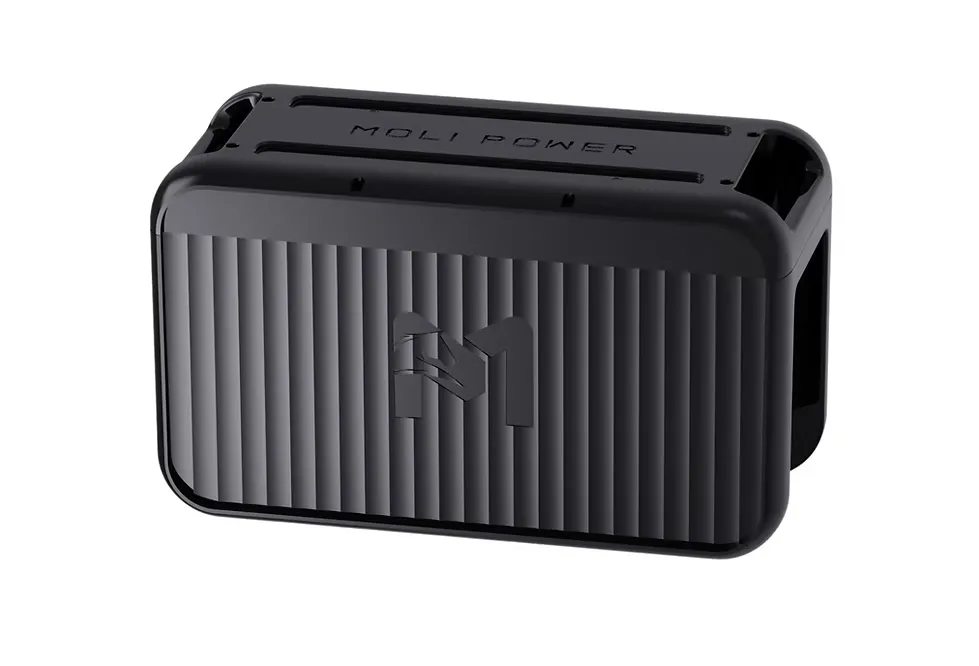
Moli Power BoltBox

The BoltBox is a stackable LiFePO4 power station built for exactly the kind of daily use backup Nigerian homes need. A single unit holds 2.7kWh of usable capacity, rated at 2000W continuous output, and combines the battery and inverter into one app-controlled unit. Units can be stacked together to scale capacity as needs grow, so it works well as a starting point that expands rather than something you replace later.

WWATECH Engineering currently stocks the BoltBox at ₦850,000, with imported wholesale pricing for the same unit running as high as roughly ₦1,656,000 depending on order volume and supplier. Buying locally in Lagos avoids the import wait, customs uncertainty and lack of local warranty support that come with ordering directly from overseas.

itel Power Tank and itel 600W

Itel

itel has built a reputation in Nigeria mostly around affordability and simplicity rather than raw power. The Power Tank, rated 500W with 1kWh capacity, is a solid all-in-one option for lights, small appliances and electronics, typically priced between roughly ₦300,000 and ₦460,000 depending on the seller. The itel 600W with a 90W panel sits in a similar bracket, commonly listed between ₦520,000 and ₦600,000 across Jumia, Konga and Jiji.

Both use pure sine wave inverters, which is safer for sensitive electronics than the modified sine wave output found on some cheaper alternatives. These are good entry points if your main need is backup for a TV, router, laptop, fans and a small fridge, not full home coverage.

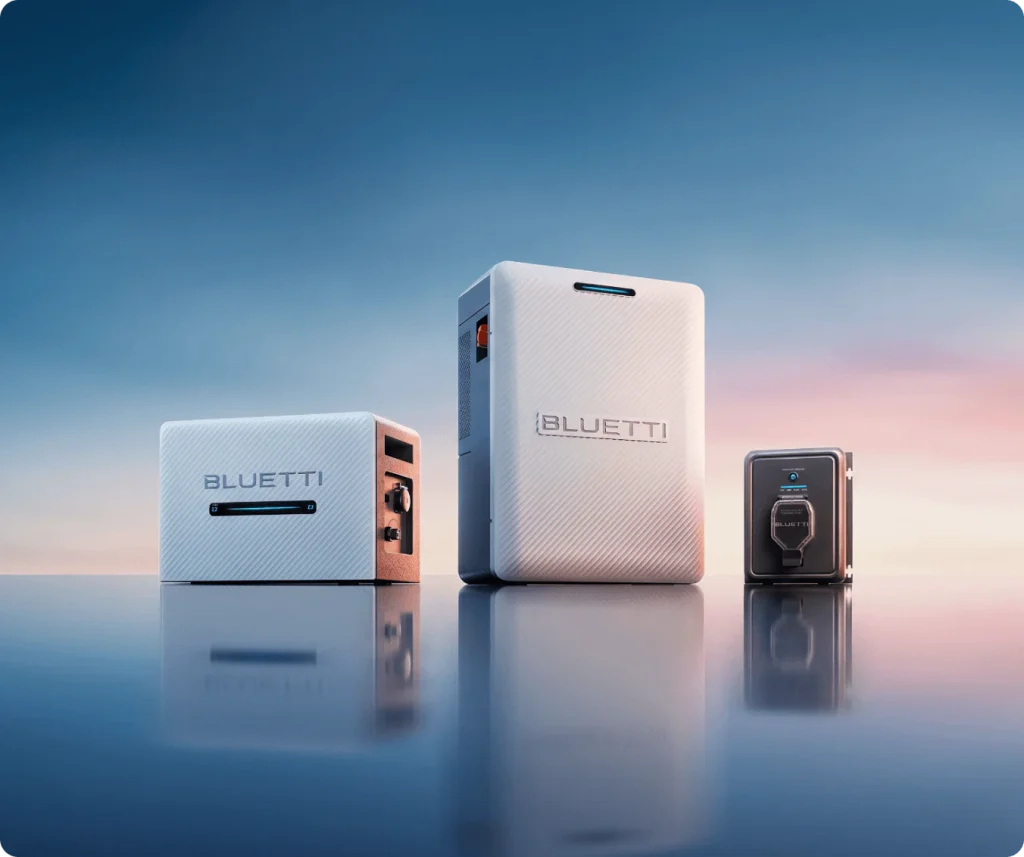
Bluetti

Bluetti

Bluetti has an official presence in Nigeria and currently offers the widest range of any single brand in the market, from entry-level units to full modular home systems. Prices run from around ₦285,000 for the compact EB3A up to over ₦5,500,000 for high-capacity modular setups like the EP500 Pro. Mid-range models like the AC180 and AC200P sit in the ₦565,000 to ₦950,000 range and cover most homes that need to run a fridge, some lighting and a few appliances through an outage.

Bluetti’s batteries use LiFePO4 chemistry rated for 3,000 to over 6,000 cycles. The brand’s Power Lifting feature lets the inverter handle appliance startup surges up to double its rated wattage, which is genuinely useful given how common high surge appliances are in Nigerian homes.

Here is how the main models compare on paper:

ModelCapacityOutputPrice (NGN)Best for
Moli Power BoltBox2.7kWh (stackable)2000W₦850,000–₦1,656,000Daily home backup, expandable
itel Power Tank1kWh500W₦300,000–₦460,000Budget backup, small electronics
itel 600W + 90W panel~0.6kWh600W₦520,000–₦600,000Entry-level home backup
Bluetti EB3A268Wh600W₦285,000–₦345,000Cheapest genuine LiFePO4 option
Bluetti AC1801152Wh1800W₦565,000–₦750,000Fridge + lighting backup
Bluetti AC200P2000Wh2000W₦700,000–₦950,000Full room backup
Bluetti EP500 Pro5100Wh3000W₦1,650,000+Whole-home or small shop

EcoFlow, Jackery and Anker

Ecoflow

These three brands are well established internationally and available in Nigeria mostly through resellers and marketplace importers rather than dedicated local stores. EcoFlow tends to lead on charging speed and app features, Jackery focuses on lighter and more portable units, and Anker’s SOLIX line pushes the fastest charging times and highest output per dollar. All three now build primarily on LiFePO4 batteries.

Because official Nigerian distribution is limited, it is worth confirming warranty terms directly with whoever you are buying from before paying. Pricing and after-sales support vary more by seller than by brand in this market.

Best Solar Generator by Use Case

  • Small homes and apartments (lights, fans, TV, router, phones): itel Power Tank or itel 600W, or Bluetti’s EB3A for a bit more headroom.
  • Daily home backup with a fridge and multiple devices: Moli Power BoltBox, or Bluetti’s AC180 or AC200P.
  • Full home backup or a small shop: Bluetti’s higher-capacity modular units, or a stacked BoltBox setup using multiple units in parallel.
  • Lowest realistic entry price with genuine local backing: itel Power Tank.
  • Long-term durability and room to expand: Moli Power BoltBox or Bluetti, both LiFePO4 with high cycle counts.

How to Size the Right Generator for Your Home

Add up the wattage of what you actually need to run at the same time, not everything you own. A fridge typically draws 100W to 200W while running but can spike higher on startup, a few LED bulbs draw under 50W combined, a TV draws 60W to 150W, and a fan draws 50W to 100W. If your total running load is around 300W to 400W, a 600W to 1kWh unit covers you comfortably.

If you are adding a fridge, pumping machine or multiple rooms, plan for at least 1.5kWh to 2kWh and an inverter rated 1500W or higher to handle startup surges. It helps to write out every appliance you would realistically run at the same time during an outage rather than guessing, since underestimating load is the most common sizing mistake buyers make. When in doubt, size up slightly rather than down, since a unit with headroom lasts longer under real daily use than one running at its limit.

Where to Buy Genuine Units in Nigeria

Stick to sellers who can confirm the battery chemistry, ask specifically for LiFePO4, and provide a real warranty period rather than a vague promise. Look for a physical or verifiable local presence, whether that is an official brand store, a known distributor, or a marketplace seller with a strong review history. Grey imports without warranty backing are common in this market and often turn out to be older, lower-cycle-life battery chemistry sold under a premium-sounding name.

Movement in the naira exchange rate means listed prices can shift by 10 to 20 percent within weeks, so treat any price you see online as a starting point rather than a fixed figure. Always ask the seller to confirm current pricing, stock availability and warranty terms in writing before paying. If a deal looks significantly cheaper than everywhere else for the same specs, that is usually a sign to ask more questions, not fewer.

At WWATECH Engineering, we stock solar generators, inverters, batteries, charge controllers and solar panels from trusted brands including Moli Power, SRNE, Star Plus, Torchin, SMS and Prag, with the BoltBox currently in stock and ready to ship across Nigeria. Buying from us means no long import wait, no customs uncertainty, and a real local warranty if something goes wrong. Whether you need a compact unit for a small apartment or a stackable setup for full home backup, reach out to us and we will help you size the right system for your load and budget.

Conclusion

There is not one universal best solar generator in Nigeria. For most homes wanting solid daily backup without overspending, the Moli Power BoltBox is hard to beat on capacity per naira, especially with its stackable design. If your budget is tighter and your needs are lighter, itel’s Power Tank and 600W units get the job done reliably, and if you want the broadest range to grow into, Bluetti currently offers the most options with genuine local support in Nigeria.

Match the unit to your actual load, not the biggest number on the box, and you will get more value out of whichever one you choose.