
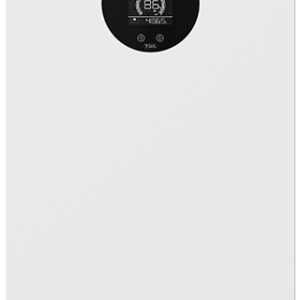
From compact lithium batteries for a small home setup to large-scale energy storage cabinets for commercial sites, here's our current battery range, all available in Lagos with delivery across Nigeria.

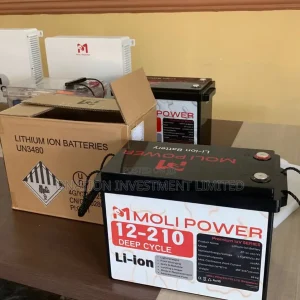
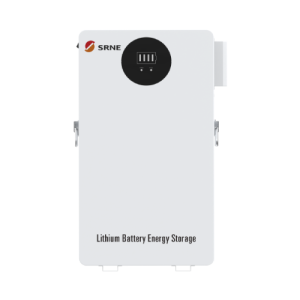
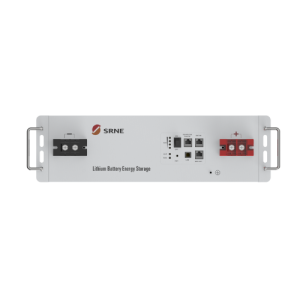
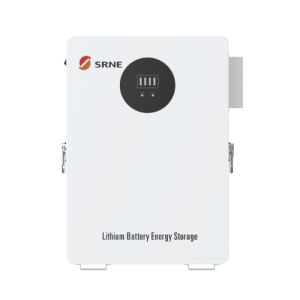
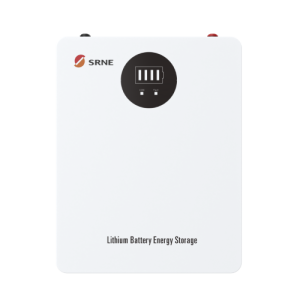
Lithium has effectively taken over the Nigerian solar battery market in the last few years, and it's worth understanding why before you compare prices. LiFePO4 batteries, the specific lithium chemistry used in virtually every solar battery sold today, can be discharged much deeper than lead-acid or tubular batteries without damage, often down to 80 or 90% of capacity compared to roughly 50% for older chemistries. That effectively means a lithium battery gives you more usable power for a given rated capacity, not just a longer lifespan.
Voltage matters as much as capacity when you're choosing a battery, and it's the detail people most often get wrong. A battery has to match your inverter's system voltage, 12V, 24V, or 48V being the common options, not just the capacity you think you need. A high-capacity battery at the wrong voltage simply won't work with your inverter, so this is always worth confirming before ordering, not after.
Cycle life is the other number worth paying attention to. It tells you roughly how many times a battery can be fully charged and discharged before its capacity noticeably degrades. A battery rated for 6,000 cycles used once a day is good for over 16 years of daily use in theory, real-world conditions usually bring that down somewhat, but it's still a far cry from the 3 to 5 years typical of lead-acid.
Frequently Asked Questions
How much is a solar battery in Nigeria?
Lithium batteries generally run from around ₦450,000 for a compact 2.5kWh to 3kWh battery, ₦1 million to ₦2.5 million for the 5kWh to 10kWh range most homes settle on, and ₦3 million or more for 15kWh and above. Large-scale commercial energy storage systems sit well outside this and are priced per project.
Which battery is best for solar?
Lithium, specifically LiFePO4 chemistry, is the standard choice today. It costs more upfront than lead-acid or tubular batteries, but lasts roughly three to four times longer, charges faster, needs no maintenance, and can be discharged much deeper without damage. Over the life of the system it almost always works out cheaper per year of actual use.
How many hours will a solar battery last?
That depends on the battery's capacity against your load, not a fixed number. Divide the battery's usable capacity in watt-hours by the wattage of what you're running. A 5kWh battery running a 500W load, a few lights, fans, a TV, a fridge cycling on and off, gives you roughly 8 to 10 hours. Run heavier appliances like an AC unit and that drops sharply. This is exactly the kind of calculation worth doing before you buy, not after.
Is it worth getting a battery with solar?
For most Nigerian homes, yes. Without a battery, an inverter can only use solar power while the sun is out and appliances are drawing it directly, useless at night or during a cloudy stretch, which is when grid power tends to fail too. A battery is what actually gets you through an outage. It's the single component that turns "solar panels" into genuine backup power.
How long do solar batteries last?
In terms of years rather than hours per charge, most lithium batteries sold today are rated for several thousand charge cycles, some well over 6,000 at 70% capacity retention. In practical terms, that's typically 8 to 15 years of daily use before capacity drops meaningfully.